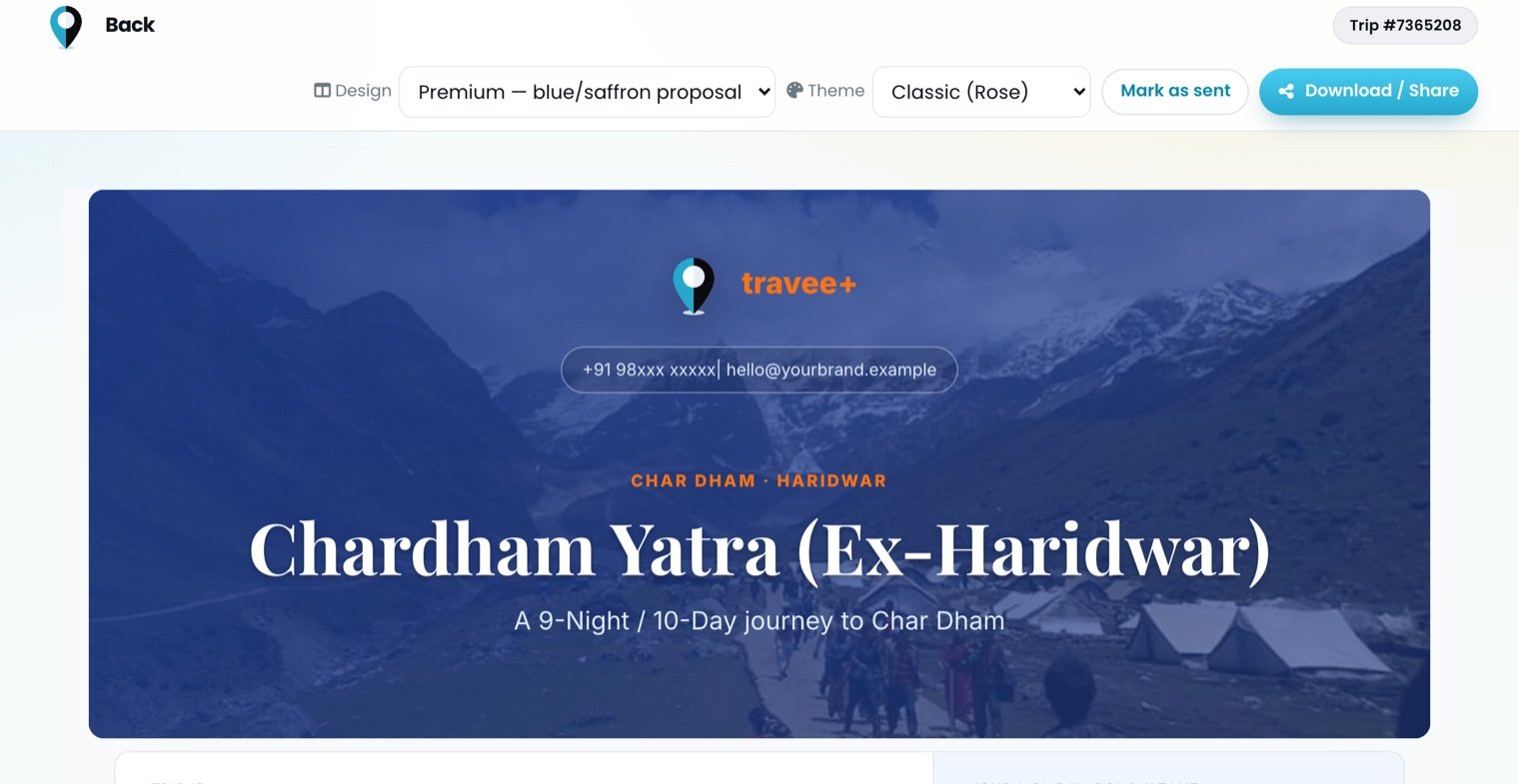
The nine-night Char Dham is the most quoted itinerary in Uttarakhand and the most re-typed. Barkot, Uttarkashi, Guptkashi, Badrinath, a night either side in Haridwar — the route barely changes from one enquiry to the next. What changes is four adults instead of two, a Deluxe hotel in Guptkashi instead of a Standard one, and a departure three weeks later that crosses into another season.
The planning is not what takes the afternoon. The arithmetic is. Here is the shape that makes it reusable, and where the ten minutes actually go.
Start from the rate card, not the last quote
A quotation copied from the last one inherits last season's hotel rates, last year's vehicle day rate and whatever was typed over on the way out of the door. Nobody notices until the cost sheet is compared with the invoice.
Start from the card instead. One place holds what a night in Barkot costs and what an Innova costs per day, and every quotation built after a rate changes uses the new one — while the quotes already sent keep the number they were sent with. That is the difference between a rate card and a folder of Word files: the card is a source, the folder is a set of copies.
Price the stop, not the trip
Barkot and Kedarnath do not cost the same. Neither do two nights in Guptkashi in May and two in September. A flat per-night figure across a nine-night route is how a quote ends up well under its own cost sheet — the average is carried by the cheap stops and paid for by the expensive ones.
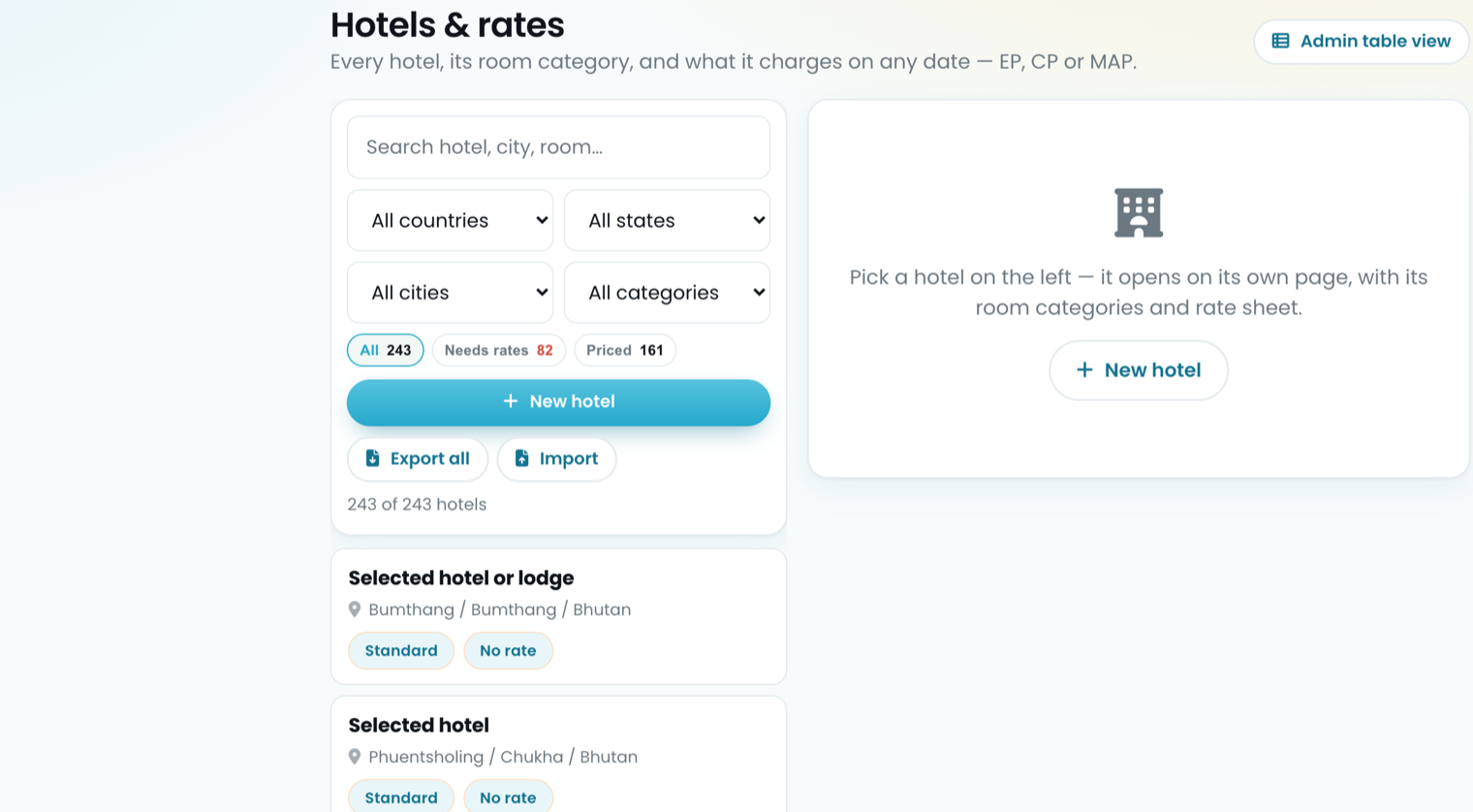
So the lookup takes a stop and a date: every night is asked what that town charges on the night the party is actually there. A ten-day itinerary leaving on 28 June is priced on two season sheets, not one, because that is what the hotels will invoice. There is more on how a rate sheet stores that in your hotel rate sheet is the quotation.
The category is a decision per stop, not per trip
"Deluxe throughout" is a sentence from a brochure, not a costing. Guptkashi may have three Deluxe properties you have contracted and Barkot none, and a pilgrimage party will happily take Standard on the transit nights and spend the difference at the Dham.
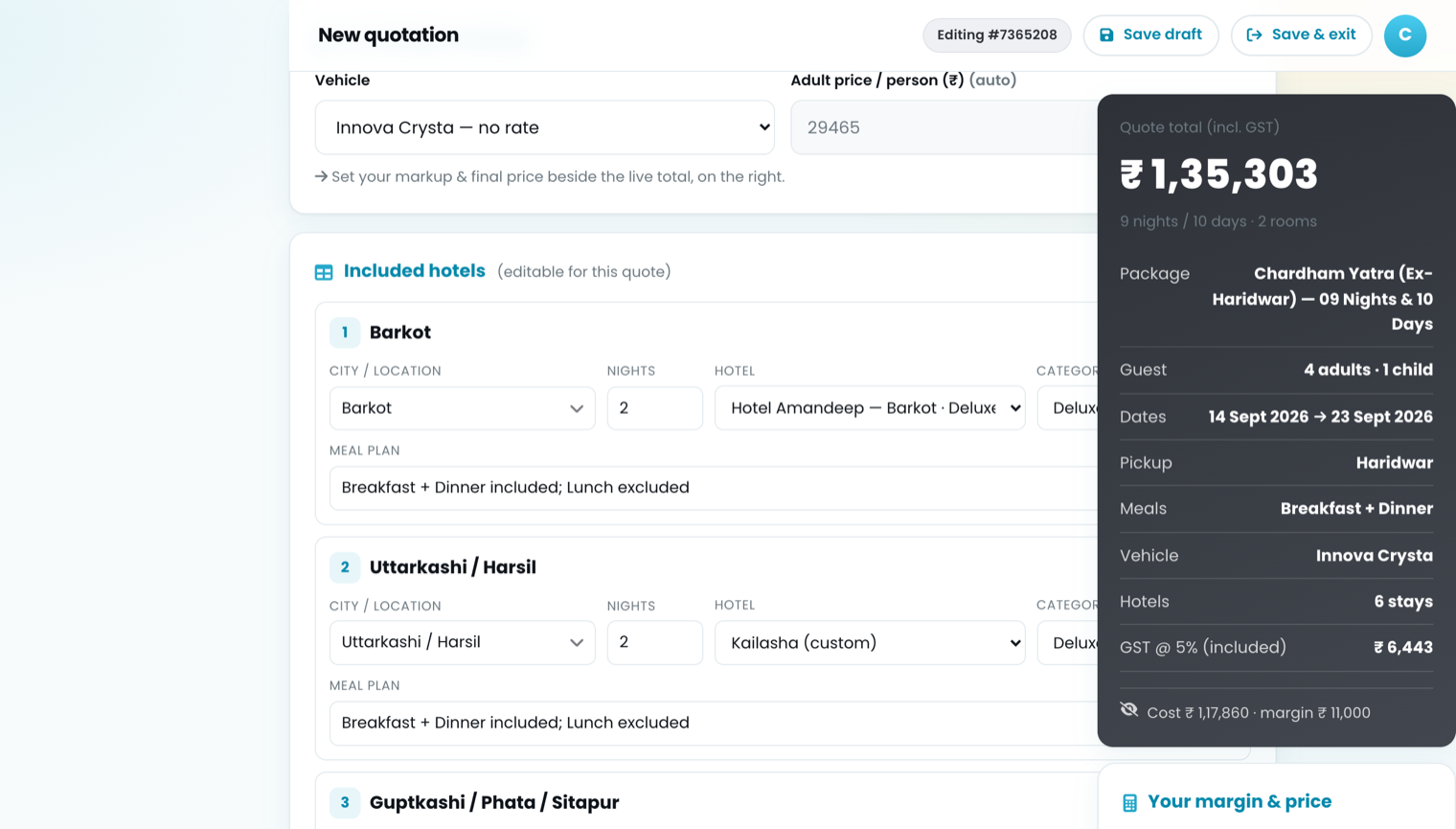
Quote each stop at its own category, and the price moves with the choice — pick Deluxe for two nights in Guptkashi and only those two nights reprice. Where a town has no contracted hotel yet, the category still prices from the card rather than refusing the trip or, worse, quietly filling in a number from somewhere else.
Nights drive the vehicle, not the other way round
A vehicle is a day rate multiplied by the days the trip actually runs, plus what the driver costs on the hill. Add a night in Badrinath and three things move together: the stay, the vehicle day count and the per-person price. Change them by hand in three places and one of them will be wrong by the time the document is sent.
Two Innovas for eleven guests is two vehicle lines, not one line at double the rate — a quote carries as many as the party needs.
Occupancy is a room question, not a headcount
Four adults and a child is not five people divided by two rooms. A double takes up to three adults and two children; the base fare covers two adults, and the third adult, the child with a bed and the child without a bed each carry their own rate:
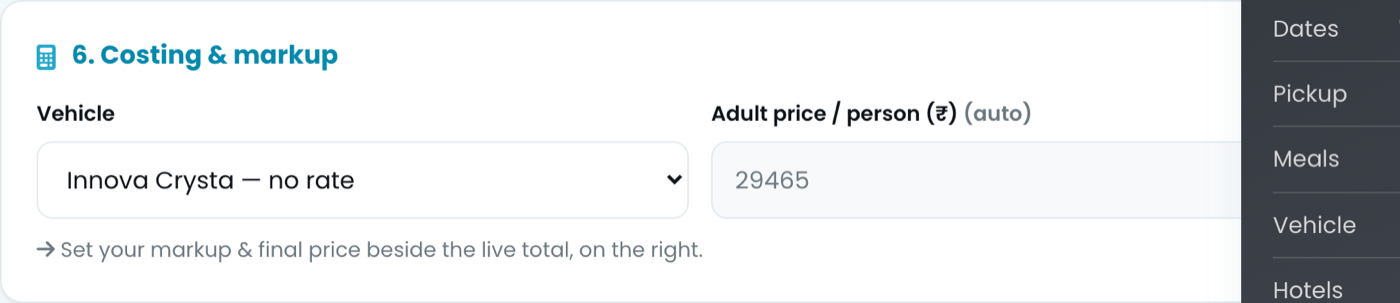
The per-person figure is calculated, not typed. It moves the moment a night, a hotel category or the party changes.
Markup goes on top; the cost stays underneath
The supplier cost is yours to see and the client's to never see. Markup — a percentage, a flat figure, or a final total you set yourself — sits on top of the cost, and GST is one field applied once on the quotation rather than baked into two hundred hotel rows. The client document carries your brand, your inclusions and your price. Markup, GST and the lines your client actually sees goes through the arithmetic line by line.
So where do the ten minutes go?
- Two minutes — route and dates. The stops in order, the arrival date, the nights at each. Everything downstream is derived from this.
- Three minutes — a category per stop. Standard on the transit nights, Deluxe where it matters, a named hotel where you have contracted one.
- Two minutes — vehicle and party. The vehicle from your fleet, the adults, the children with and without a bed.
- Two minutes — markup and tax. Your percentage, GST included or extra, the rows you want the client to see.
- One minute — send it. PDF, Word, email or a share link, all from the same record — see one quotation, four ways to send it.
The second Char Dham quotation of the week is faster still, because the first one can be saved as a package: the route and the shape stay, and the dates and the party are what you change. That is the whole trick — not typing faster, but not retyping at all.
Our own desks publish theirs the same way. You can see the shape on the packages page.
Stop rebuilding the same quotation.
One rate card, one branded document, sent in minutes instead of an afternoon.
See what it does